
by guest blogger, Jody Gentian Bower; editorial review by Nancer Ballard and Savannah Jackson. Jody Gentian Bower, PhD., is a cultural mythologist and the author of Jane Eyre’s Sisters: How Women Live and Write the Heroine’s Story.
In the 1980s, I belonged to a women’s book club. Over time I noticed that most of the novels we read featuring a female protagonist had a similar plot. Then I realized that many of the great novels by women, the established classics, followed the same plot. I found a similar plot in the biographies of many noted women.
The idea that women authors* have been telling a consistent story for centuries wouldn’t leave me alone. Yet I couldn’t find any discussion of this plot by scholars of literature. The Heroine’s Journey by therapist Maureen Murdock, Women Who Run with the Wolves by folklorist Clarissa Pinkola Estés, and Jean Benedict Raffa’s memoir The Bridge to Wholeness touched on some of the motifs I’d seen (and opened my eyes to a few I’d missed), but their approaches were not quite what I was looking for. My fascination with the literary plot itself eventually led to Jane Eyre’s Sisters: How Women Live and Write the Heroine Story.
I came to call this plot the Aletis story—aletis being an ancient Greek word that means “wandering heroine.”  Her story is not defined by an external quest like the Hero’s Journey plot. Instead, her journey takes her farther and farther away from home until at last she finds the place—both within and without—where she is able to create the life that she has always longed for. Unlike the hero, who proves himself a man by a heroic act that enforces and preserves the idealized vision of the status quo of the community, the Aletis finds her inner worth and bases her life on what she values. She doesn’t ask anyone else to change, but her example often causes her community to shift out of old ways that no longer work.
I call her the wandering heroine because she keeps moving, keeps on leaving situations where she cannot be herself. For example, Jane Eyre longs for a life lived fully, with passion. She chooses to leave her adoptive, abusive home to go to school; chooses to leave Lowood School and her teaching job to become a governess for strangers; chooses to leave Mr. Rochester when he asks her to compromise her integrity; and chooses to leave the safe harbor she’s found with her cousins when St. John tries to force her into a loveless marriage. Eventually, the Aletis finds (or, like Jane, builds) her own home where she can put down roots and create what she was meant to create. She provides an opportunity for others to do likewise, like Celie of Alice Walker’s The Color Purple, who draws a community of like-minded creative people to her—including her own formerly abusive husband.
But first the Aletis must journey into the wild place, the place of danger, the very place her family and community have warned her against. In old tales like “Vasilisa the Beautiful,” she goes from her little village into the forest where the scariest thing of all, the witch Baba Yaga, lives. 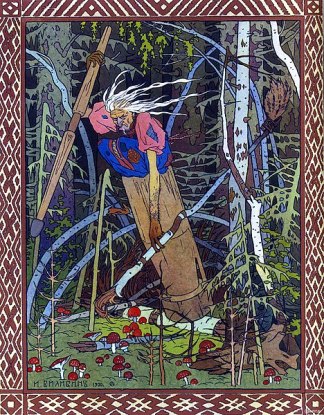 In many recent stories the wild place is the big city, the center of sin and crime. The heroine has been taught all her life to fear this place, yet she is drawn to it.
In the wild place she encounters the witch. The wicked witch is often the villain of a hero story; the hero must defeat her. But in Aletis stories, the witch becomes the girl’s teacher. The witch must be approached with respect; not as an enemy, but not in a craven way either. The heroine has to prove herself to the witch, and the first thing she must prove is that she respects herself too. She must stand boldly before the witch and tell her what she has come for.
The witch sniffs, unconvinced. She sets the girl a series of impossible tasks. These tasks require the girl to use discernment—to sort out the good seeds from the bad—or be diligent and unwavering as she spins the mountain of straw into gold. Her commitment provides the magic that allows the task to be accomplished. Once the girl passes the test, the witch gives her what she needs.
Miranda Priestly of Lauren Weisberger’s The Devil Wears Prada is a modern Baba Yaga, feared by all who know her. (“Miranda” means “miracle” and “Priestly” evokes someone in touch with divine power.) The heroine Andrea, newly come to the big city from her small town, walks boldly into Miranda’s demesne and asks for a job. Miranda sniffs, as do all the sycophants around her, but she lets Andrea stay and sets her a series of increasingly impossible tasks. After Andrea passes the tests, Miranda recommends her for her dream job, investigative journalism. Andrea will not only get to write but will have a positive effect on the wider world.
The Aletis story teaches us how to go willingly into the heart of the unknown. It teaches us that when we come face to face with those we’ve been taught to fear, we don’t have to fight them or defeat them. Instead, we must stand firmly in our integrity as they test our commitment to learning from them. In showing them respect while maintaining our own self-respect, we often receive their respect and ultimately, their cooperation and aid.
To learn more about Jody’s work or purchase a copy of Jane Eyre’s Sisters: How Women Live and Write the Heroine’s Journey, click here.
*And a few visionary men. Shakespeare’s Viola of Twelfth Night, Charles Dickens’s Lizzie Hexam of Our Mutual Friend, Daniel Defoe’s Moll Flanders, and J.R.R. Tolkien’s Éowyn of The Lord of the Rings are examples.


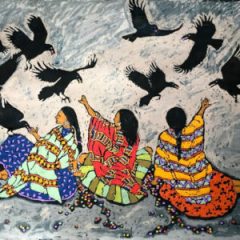 he role of women in all facets of life is a topic I return to again and again. I am especially attracted to women from more rural, indigenous cultures.
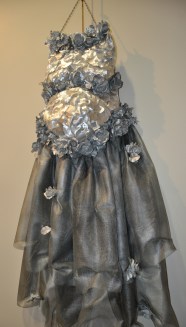
 What about the Lowell Mill workers? Women throughout the world have played important roles in virtually every form of constructive peaceable work from antiquity to the present. The piece’s subtitle, Women in Labor, is a play on the concept of women forever giving birth creatively to the world on many levels.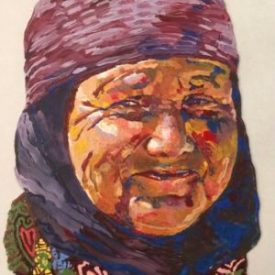





 Rather than focusing on a single protagonist, I Want to Go to Jail follows a group of women suffragists and their struggle for a constitutional amendment guaranteeing women the right to vote. The drama generally follows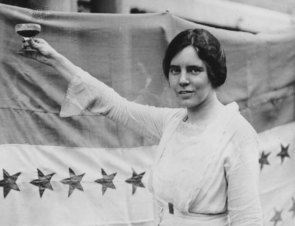
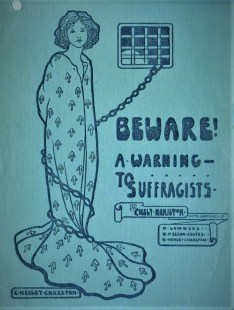 Inside the Charles Street Jail, the suffragists, who have vowed to go on a hunger strike, have been separated and housed in cold cells with buckets for toilets. Suffragist, Betty Gram, who has been jailed before, starts to experience what we would now call Post Traumatic Stress Disorder (or Acute Traumatic Stress since she is again in jail), as she recalls rats dragging food from her cell during her previous time in jail as an advocate for women’s rights. From their own cells, other suffragists call out their sympathy and support. Others muse about how the world and their homes households are proceeding without them. Eventually, they access their strength and commitment to sisterhood by singing together.
 In the last scene, the women hold a ceremony at a local theater to honor those who went to jail for the cause and present them with “jailhouse door pins.” It is a momentary pause and time for celebration, for the play appropriately ends with Alice Paul announcing that there is more work to be done, and a new cycle of activism must begin.



 This year we are sorry for the passing of

 The Heroine Journeys Project