
This is the second in a two part series written by Savannah Jackson; ed. assistance by Nancer Ballard.

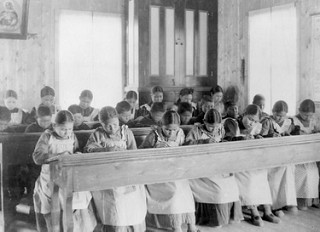
Students at a residential school in Fort Resolution, Northwest Territories.
In our most recent post, we examined the experiences of indigenous children within the Canadian residential school system. The practice of involuntarily removing children from their communities and cultures, which formally lasted for 165 years, fundamentally altered the lives of indigenous people and their communities. Our last post used the Heroine’s Journey as a framework in the attempt to better understand some of the impacts on survivors and the processes by which indigenous people were intentionally stripped of their identities. In this post we will use the Heroine’s Journey to approach the healing process.
The “history” of the residential schools does not have a beautiful, cathartic, final moment that marks the completion of indigenous people’s traumatic journey. A single monetary payment or moment of clarity cannot suddenly rectify what is now almost two centuries of hurting. The heroine’s journey is a cycle of stages that can occur non-linearly and can be passed through more than once.
“The residential school system took away my language, my culture, and my identity…People are left with a [need for a] sense of belonging. You want to find your sense of belonging and identity.”
—Michael Cheena, Survivor
Though the residential school practice officially ended in 1996, another decade would pass before the survivors received a formal apology from the Canadian Prime Minister Stephen Harper. (See statement here). PM Harper’s acknowledgement that the federal government has caused lasting harm to survivors, family members, and communities was an important moment of recognition and apology. Harper also established the Truth and Reconciliation Commission (TRC) at this time; it is composed of both indigenous leaders and nonindigenous members. Seven years later, in 2015, the TRC officially declared the residential school system to have constituted cultural genocide and issued a list of 94 “Calls to Action” for how to move forward with reconciliation and reparations. The Calls to Action include such things as eliminating the discrepancy between educational funding for aboriginal schools and non-aboriginal schools; calling upon the Canadian government to acknowledge that Aboriginal rights include Aboriginal language rights; and providing adequate resources to social workers to help keep Aboriginal families together.
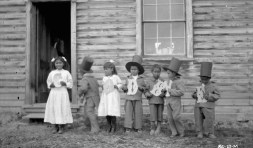
Indigenous children at the Fort Simpson residential school in the Northwest Territories.
Progress has been slow, and a large amount of work remains to be accomplished. As of March 2018, only ten of the TRC’s 94 proposals had been completed. Harper’s 2008 apology did not include survivors in Newfoundland and Labrador because the residential schools in this province were not directly managed by the Canadian federal government when the schools were opened (the province did not join Canada until 1949). This apology finally came with Prime Minister Justin Trudeau’s statement in November of 2017. Although Catholic missionaries, priests, and nuns were instrumental in establishing and teaching in residential schools, in March of 2018, Pope Francis decided not to apologize for the role of the Catholic church in the residential school system.
“You know they were trying to tell me that’s this church, or this place we’re in, you know, I had to do, I had to be this perfect, perfect person or whatever. And yet at the same time, that’s not what I saw. Because I thought to myself, well, if you’re a priest and nun, how come you’re doing this to this child, or you’re doing this to me, and I would say it out loud, and I’d get more lickings.”
—Julianna Alexander, Survivor
The Canadian government’s formal recognition is an important first step, but first steps are just that—they are not the journey’s end. Many questioned Harper’s 2008 apology when only a year later, he stated at the 2009 G20 Pittsburg Summit that Canada has “no history of colonialism.” In September of 2018, students at an Alberta school were asked on a multiple-choice exam to name a positive effect of residential schools on indigenous children. This is like asking one to identify the benefits of false incarceration. It is not indicative of a society in which both indigenous and non-indigenous people have embraced the process of healing, which requires a long-term collaborative effort.
“There was nobody there to give any hugs. There was nobody there to say goodnight. There was nobody there to even wipe your tears, or we will hide our tears… Late at night you can hear somebody crying. I don’t know what time it is. There’s no time or nothing that I know, but I know it’s very late at night. There’s nobody to tell us. Everything we do in there is wrong, wrong, wrong, wrong, is what I hear. Couldn’t do anything right.”
—Florence Horassi, Survivor
The Canadian government continues to negotiate settlements and reparations with indigenous individuals as well as working toward providing adequate funding for schools on reserves. Indigenous communities continue to be at odds with the Canadian government in the effort to achieve reparations that truly respond to survivors’ and communities’ needs.
The government has focused on payments to individual survivors depending on the number of years they spent in the residential school system. Some indigenous people have criticized this as an insulting attempt to put a price on human suffering and loss of cultural identity. Although some money has gone towards healing and education programs, indigenous communities have called for more community-based, intergenerational reparations. Those who went through the residential schools are called survivors, and their children are called intergenerational survivors. This stresses the impact that the school system has had on indigenous communities beyond those who personally experienced the residential schools. Providing financial aid only to survivors who are still alive does not address many of the issues that indigenous communities face today.

Indigenous people protesting against the C-45 bill in Ottawa as part of the Idle No More movement
Individual reparations alone do not address the deeper level of the persisting trauma. Individualizing reparations fails to acknowledge that the survivors are both individual victims of violence and group victims of a dominant group’s systemic dehumanization. Reparations and healing must consistently recognize and address both.
The heroine journey framework emphasizes that healing is not an oppositional dichotomy between natives and settlers in which natives reclaim their cultural identity simply by convincing settler that they deserve respect. Nor can settlers atone for the natives’ traumatization with one apology and a donation. The heroine’s journey is a one of non-linear movement toward wholeness. Attempts to erase what has been done or purchase forgiveness doubles the initial violation and continues to marginalize indigenous peoples. Healing is not what the federal government determines to be adequate or affordable funding according to non-indigenous standards.
We cannot alter the past injustices suffered by indigenous people faced through the residential school system. However, we can continue to recognize what has happened and to address long-lasting and multidimensional impacts honestly and empathically. We must consistently be aware that healing from trauma is neither linear nor subject to a quick fix. And we must not let this, or other similar things, happen again. We cannot participate in the healing of communities and their members while also treating them as separate and other. To heal the split between the original and dominant cultural identities in the pursuit of wholeness, we must listen to the requests and needs of indigenous communities and incorporate both the experiences of the survivors and the role of the dominant culture in survivors’ experiences into our consciousness.
“That’s our belief as First Nations that we don’t just think about ourselves. We have to think of the next generation and the ones yet to come…They’re not here yet, but we have to prepare for them. And preparing means we’ve got to put down that hurt and that pain we carry now. We can’t let that be our life.””
—Viola Papequash, Survivor
For more information on the history of the residential school system, and the indigenous experience and perspective, you can visit wherearethechildren.ca/en


 Rather than focusing on a single protagonist, I Want to Go to Jail follows a group of women suffragists and their struggle for a constitutional amendment guaranteeing women the right to vote. The drama generally follows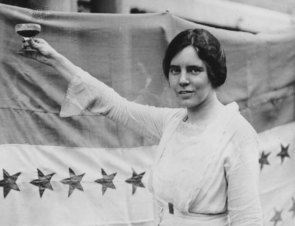
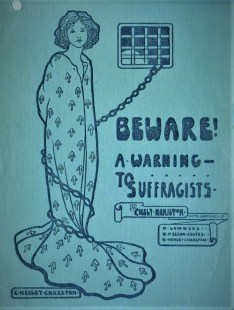 Inside the Charles Street Jail, the suffragists, who have vowed to go on a hunger strike, have been separated and housed in cold cells with buckets for toilets. Suffragist, Betty Gram, who has been jailed before, starts to experience what we would now call Post Traumatic Stress Disorder (or Acute Traumatic Stress since she is again in jail), as she recalls rats dragging food from her cell during her previous time in jail as an advocate for women’s rights. From their own cells, other suffragists call out their sympathy and support. Others muse about how the world and their homes households are proceeding without them. Eventually, they access their strength and commitment to sisterhood by singing together.
 In the last scene, the women hold a ceremony at a local theater to honor those who went to jail for the cause and present them with “jailhouse door pins.” It is a momentary pause and time for celebration, for the play appropriately ends with Alice Paul announcing that there is more work to be done, and a new cycle of activism must begin.





 The author then describes Marg’s illusory perfect world from Sylvia’s point of view. Marg is a university professor who teaches in the linguistic department who “possessed the room” and commands “a sort of erotic attention [by] her confidence.” Sylvia, a couple of years older than Marg, feels as if she plays second fiddle to her younger sister. Sylvia has worked at a variety of community non-profits doling out food to the homeless and delivering community newspapers door-to-door. She is, by her own half-joking admission, “still trying to find herself.”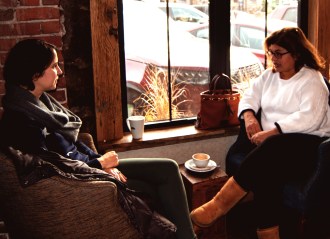
 Marg listens to Sylvia describe Hugh’s illness and the difficulty of telling Sylvia’s kids (she now has two) and tears up when Sylvia tells her she already finding feels sad to see High’s empty coat hanging in the hall.



 This year we are sorry for the passing of

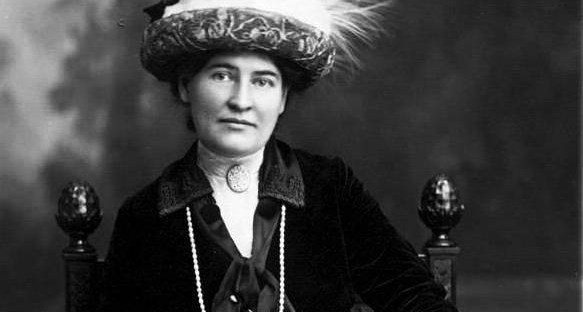
 Eden has wanted to an actress from the time she was very young and is convinced “that she would live far away in great cities, … be much admired by men and … have everything she wanted.” This vision guides Eden throughout her life and she accepts advice (such as changing her name from Edna to Eden) from anyone whom she believes can move her closer to international fame and adoration. She goes to New York, where she believes she is fated to find someone who will take her to Paris. In New York, Eden is for the first time momentarily free to do what she wants, when she meets Hedger who presents her with the opportunity for a new life perspective .
 In Coming, Aphrodite!, Cather presents her readers with a complex discussion of success. Both characters find the success they seek, and Cather is careful to present a neutral view. But by the close of the story one senses that her sympathies lie with the Heroine’s Journey.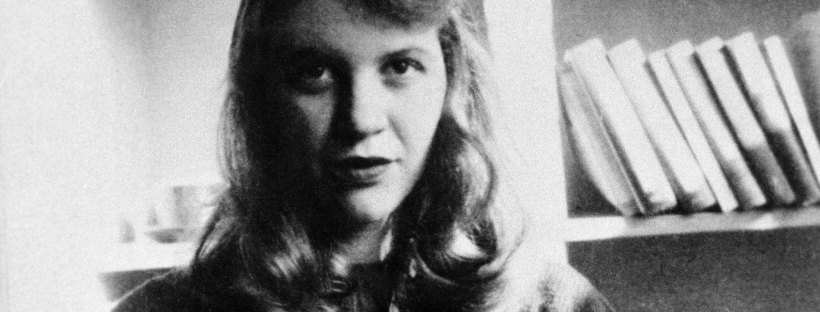






 When Abraham Lincoln is elected President, First Lady Mary Todd Lincoln selects Keckley from among numerous applicants to be her personal “modiste.” As her modiste, Keckley has the responsibility for designing and creating the First Lady’s gowns and dressing her for important occasions. Mary Todd Lincoln is viewed as an outsider by Washington society women, and Keckley becomes the First Lady’s trusted confidante. If the story had ended here, it would be a hero’s journey arc – e.g., former slave overcomes great odds to become a member of the White House’s trusted staff through her own ingenuity and skill during the years in which Abraham Lincoln signed the emancipation proclamation. But Keckley’s life and Chiaverini’s story are more complex and don’t end with Keckley becoming a celebrated seamstress and Mrs. Lincoln’s confidante.
 Chiaverini chronicles Keckley’s post-White House life with the increasingly debt-ridden and mentally compromised Mrs. Lincoln. When the money runs out, Keckley tries to earn a living by writing her remembrances of her time in the White House, by writing her remembrances o her time in the White House, but is betrayed by her publisher. Although Keckley intends her portray Mrs. Lincoln with sympathy, the book causes a public outrage in large part because Keckley, an unschooled African American, has dared to give voice to her impressions o the inner workings of the White House. Moreover, her publisher ignores her instructions and adds the contents of Mrs. Lincoln’s confidential letters to Keckley. Not only does Keckley fail to earn any much-needed money from the book, she is scorned by the public and Mrs. Lincoln refuses forgive her, see her, or believe in her good intentions. The novel follows Keckley’s subsequent efforts to recover her life as an independent seamstress and her years as a dressmaking instructor in a college. When she suffers a stroke, she is gain without means and is forced to reside at the Home for Destitute Colored Women and Children a few blocks from the White House. Keckley endures a multitude of hopes and heartbreaks, and Chiaverini offers no “final” triumph (or failure).
 Mrs. Lincoln’s Dressmaker closes with an affirmation of the complexity and dignity of Keckley’s whole life, including her losses. Instead of focusing on Keckley’s unusual role in the White House, Chiaverini observes that “[Keckley] had lived a full and fascinating life. She had known the most remarkable people of the age, and she had never refused to help the humble and down trodden. Despite its disappointments and losses and heartbreaks, she would not have wished her life a single day shorter—nor, when the time came for her to join the many friends and loved ones who had gone on before her, would she demand an hour more.”
 The Heroine Journeys Project